

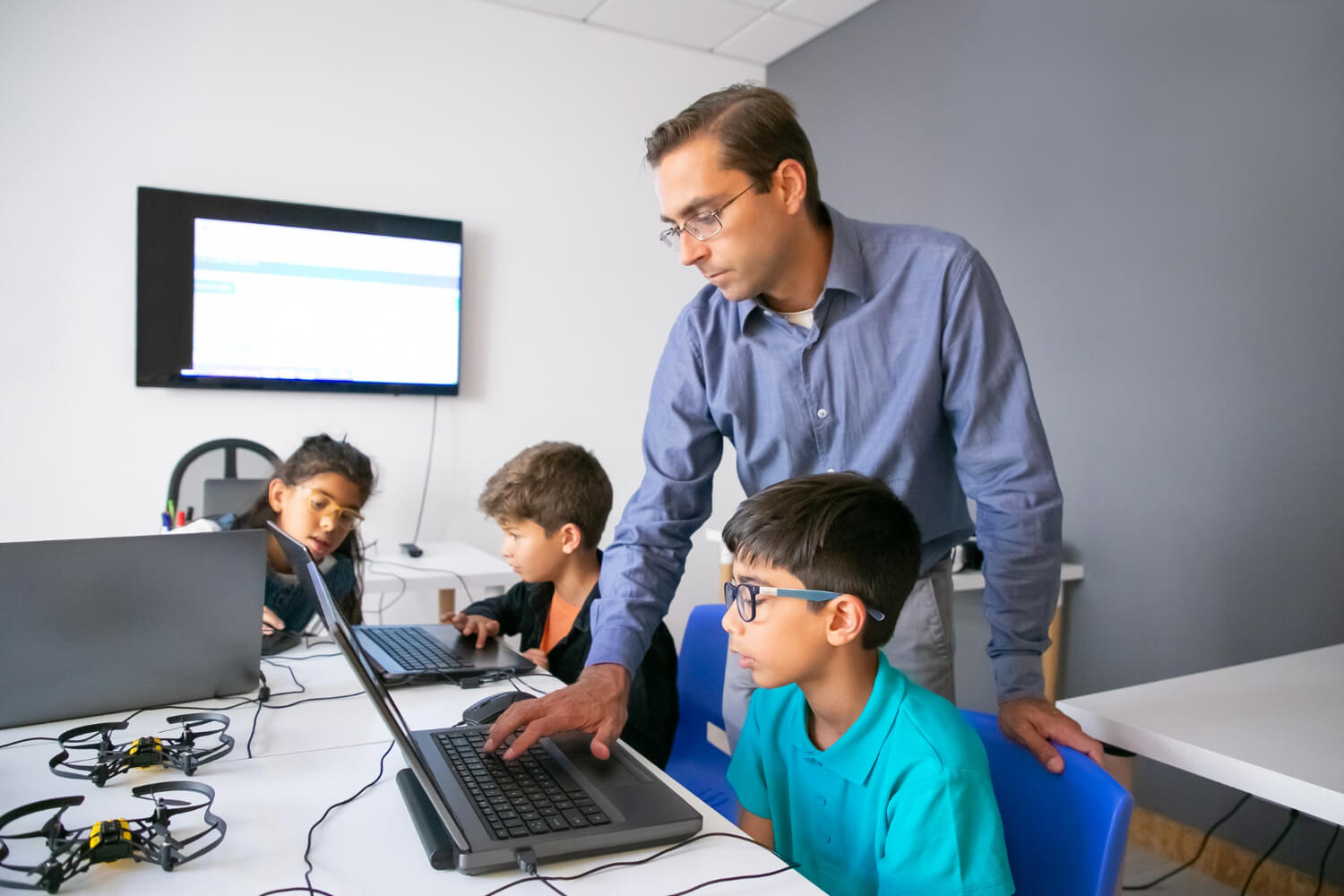
Artificial intelligence is changing how people learn, work, and solve problems. From digital learning platforms to AI-powered educational tools, technology is becoming an important part of modern education. In Dubai, where schools serve students from diverse educational backgrounds, understanding artificial intelligence can help children prepare for future academic and career opportunities.
The growing focus on AI in Dubai schools raises important questions for parents. What will students learn? Which skills will matter most? And how can families help children use technology responsibly? Understanding these changes can help parents support their children’s education while ensuring they continue to develop essential human skills.
How Artificial Intelligence Is Changing Education in Dubai
Artificial intelligence refers to computer systems that can perform tasks such as recognizing patterns, analyzing information, generating content, and answering questions. In education, these capabilities can support classroom activities, provide practice exercises, and help students explore complex topics. The growing interest in AI education Dubai reflects the importance of preparing students for a world where technology will influence many professions.
Depending on their school’s curriculum and available resources, students may encounter AI through coding activities, digital learning platforms, robotics projects, and classroom discussions about technology. These experiences can introduce them to how AI works and where it can be useful.
However, technology should support learning rather than replace teachers. Educators continue to play an essential role in explaining concepts, encouraging curiosity, and helping students understand information.
What Students May Learn About AI in School
AI education involves more than learning how to use digital tools. Students also need to understand the principles behind the technology and recognize its limitations.
1. Understanding the Basics of AI
Younger students can begin by exploring simple examples of artificial intelligence, such as voice assistants, recommendation systems, and image recognition.
As students progress, they can learn how computers use data to identify patterns and generate predictions. These foundations help them understand that AI systems are designed by people and may produce inaccurate results.
2. Coding and Computational Thinking
Coding teaches students how to break down problems into smaller steps and develop logical solutions. Activities involving programming, robotics, or simple AI models can help students practice these skills.
Computational thinking also encourages learners to identify patterns, test ideas, and correct mistakes. These abilities are useful beyond technology-related subjects and can support learning in Math and Science.
3. Data Literacy
AI systems depend on data. Students should understand how information is collected, organized, analyzed, and interpreted.
Learning to read charts, compare information, and identify patterns can help children make informed decisions. They should also recognize that incomplete or biased data can lead to misleading conclusions.
4. Responsible and Ethical Technology Use
Students need guidance on privacy, fairness, copyright, and academic honesty. They should understand why personal information must be protected and why AI-generated answers need to be checked.
Responsible use also means acknowledging when AI has contributed to an assignment and following school rules about permitted tools.
Essential Skills Students Will Need in an AI-Driven Future
Although technical knowledge is valuable, students need a balanced combination of digital and human skills.
- Critical Thinking
AI tools can provide answers quickly, but those answers are not always accurate. Students must learn to question information, check sources, compare viewpoints, and identify errors. These habits help learners make thoughtful decisions instead of accepting every digital response as fact.
- Creativity and Problem-Solving
Creativity allows students to develop original ideas, explore different approaches, and find solutions to unfamiliar challenges. Project-based activities, experiments, writing assignments, and collaborative tasks can strengthen these abilities. AI may assist with brainstorming, but students should learn to evaluate suggestions and develop their own ideas.
- Communication and Collaboration
Working with others remains important in every learning environment. Students should practice explaining their thinking, listening to different perspectives, and sharing responsibilities during group projects. Clear communication also helps students describe problems accurately and use technology more effectively.
- Adaptability and Digital Confidence
Technology will continue to change, so students need to remain open to learning new skills. They should become comfortable exploring unfamiliar tools, asking questions, and correcting mistakes.
The goal is not to master every new platform. Instead, students should develop the confidence to learn, adapt, and use technology thoughtfully.
The Role of AI-Powered Tools in Everyday Learning
AI-powered tools can offer explanations, practice questions, language assistance, and feedback on selected tasks. When used appropriately, they may help students revisit difficult concepts and explore subjects from different perspectives. Interest in AI learning Dubai also highlights the importance of helping students distinguish between using technology for support and relying on it to complete their work.
For example, a student struggling with a Math concept might use an approved digital tool to explore another explanation. The student should then solve practice questions independently to check their understanding. Parents and educators should encourage children to verify AI-generated information, protect personal details, and follow school guidelines. AI tools should complement classroom instruction, not replace independent thinking or meaningful interaction with teachers.
How Parents Can Prepare Children for AI Education
Parents do not need advanced technical knowledge to help children develop useful AI skills. Simple habits at home can build curiosity and responsible technology use.
- Ask questions: Encourage children to explain how a digital tool works and whether its answers are reliable.
- Explore technology together: Discuss everyday examples of AI, including navigation tools and voice assistants.
- Promote independent thinking: Let children attempt problems before seeking digital assistance.
- Discuss online safety: Teach children not to share private information with unfamiliar platforms.
- Encourage balanced activities: Make time for reading, physical activity, creative projects, and face-to-face conversations.
These practices help children build a healthy relationship with technology while continuing to develop social, emotional, and academic skills.
Preparing Students for the Future With The Tutoring Center Dubai
As technology becomes more prominent in education, strong academic foundations and independent thinking remain essential. The Tutoring Center Dubai supports students through One-to-One Instruction, with one tutor for a maximum of three students, and The Rotational Approach to Learning.
Students can receive structured academic support in Math, English, Science, and major A-Level subjects, including Physics, Chemistry, Biology, Math, and English. These learning experiences can help students strengthen subject knowledge, build confidence, and develop the skills needed to approach unfamiliar challenges. For families exploring AI learning Dubai, The Tutoring Center Dubai offers an approach focused on meaningful learning, active engagement, and the development of lasting academic skills.
Frequently Asked Questions
AI education introduces students to artificial intelligence, its applications, and its limitations. Depending on the school, learning may include coding, robotics, data literacy, and responsible technology use.
Children can explore simple AI concepts through age-appropriate activities during their early school years. More advanced topics can be introduced as their mathematical, logical, and digital skills develop.
Critical thinking, problem-solving, creativity, communication, data literacy, and digital responsibility are important. These skills help students evaluate information and adapt to changing technology.
No. AI tools can support selected learning activities, but teachers provide guidance, context, encouragement, and human interaction. Students still need educators to help them understand concepts and develop independent thinking.
Parents can discuss online safety, encourage children to verify information, promote independent problem-solving, and establish clear rules for using AI tools in schoolwork.